
Bulawayo, Zimbabwe
I travelled to Zimbabwe with Khanyi to meet my in-laws for the first time. I came home knowing my wife, her maternal family, and Bulawayo more deeply.
The door she almost knocked on
Our first stop was Mzilikazi, the township where Khanyi grew up. She walked me down the streets she played in, pointed out the houses they lived in. Her face lit up with every memory she revisited. She nearly knocked on one of the previous apartments, curious as to who lives there now.
At some point I asked her why her past was so important to her, why it mesmerised her? Her answer was simple: this is my family’s history, this is where I come from. I sat with that for a while. I have always thought of history as something you read. For her, it is something you stand within and relive. That’s the first discovery I made about Khanyi on this trip.
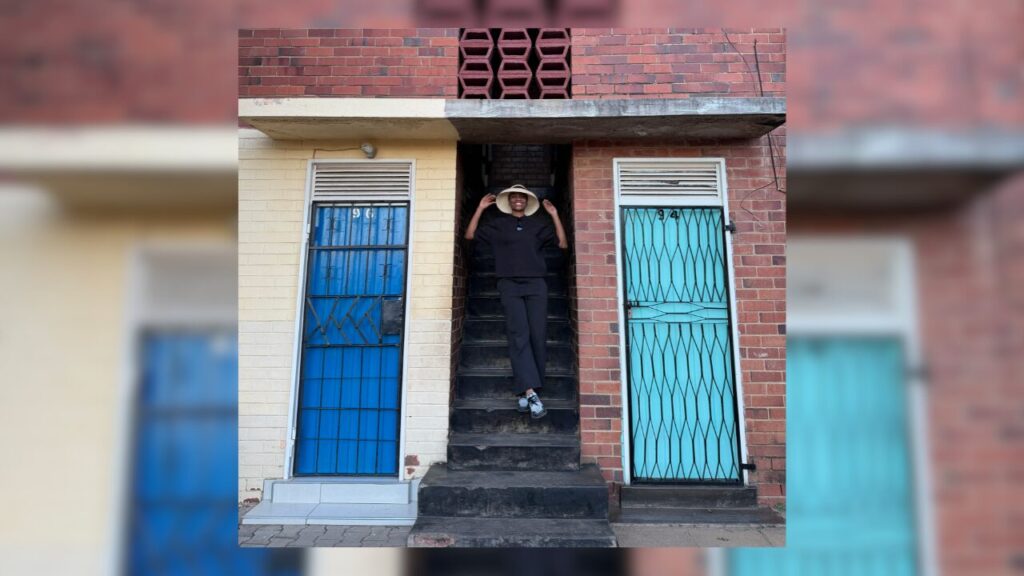
Where it all started, Mzilikazi
Stocking up, and a lesson from Malume
Day two was logistics. We were heading to Tsholotsho, about 80km from Bulawayo, where Khanyi’s grandparents (Gogo and Khulu) live on the farmlands, off the grid. We stocked up properly: food, water, drinks, and solar lamps to keep us comfortable for the week.
We ran the errands with Malume, Khanyi’s uncle…and now mine too. I had first met him at Kangaziwe in 2024 so a bond already existed. We talked for hours. Not politics, we stayed well clear of that, but the economy. The dollar hustle. Where the gaps in the market are. How mining is growing and the Chinese are becoming more entrenched, especially in lithium. I had read about all this. What struck me was feeling the pulse of it all through Malume. Zimbabwe was not abstract anymore. This is where my wife comes from, and that makes it part of me.
The road no one warned me about
The drive to Tsholotsho had two halves. A tar road and an off-road stretch. What Malume did not mention was the quicksand along the off-road section. My first time driving on quicksand and I nailed it. The trick was to feather the throttle, keeping constant motion to avoid getting stuck.
At one point the steering was at ninety degrees while the car held its line. It felt like rally driving and I loved it. I ran that stretch four times over the trip, in and out.
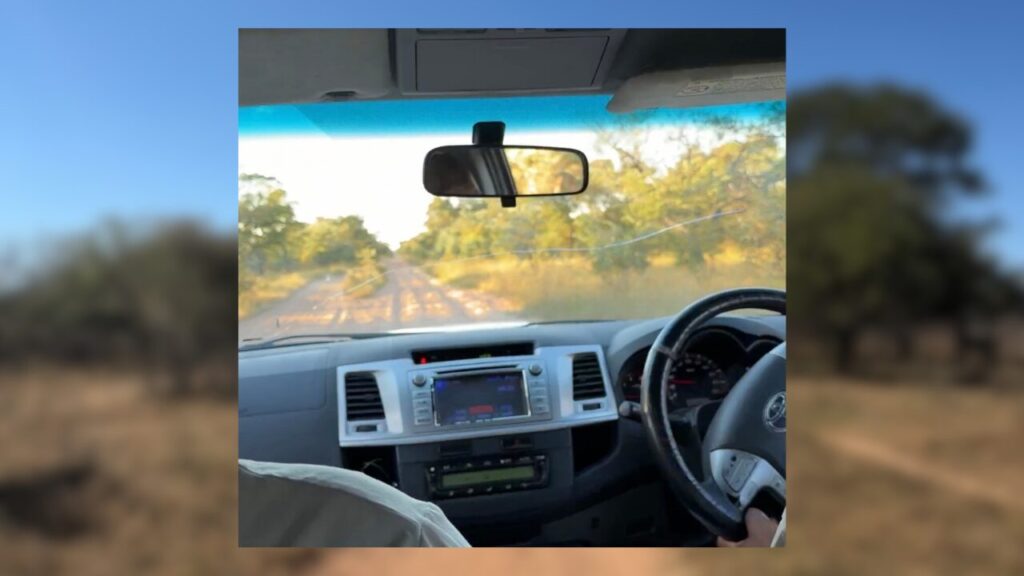
The road into Tsholotsho, best done in a 4×4
A welcome at sunset
We rolled into the farmlands just as the sun was setting. Gogo and Khulu were waiting, and the welcome was warm before we even reached the door. We unloaded the groceries and gifts for Gogo and Khulu. Khanyi, who never misses a photo opportunity, made sure we captured all of it. Everyone was happy.
There are a few things harder than trying to win over a family; their acceptance was important to me. I went in as myself, nothing performative. Khanyi and I were joined at the hip all week, attentive to each other, and I think that surprised them in the best way. In the mornings I was out at the borehole running the pump and drawing the water while Khanyi was in the kitchen. They wanted me to be comfortable and kept trying to stop me helping around the farm. Eventually they fully embraced who I was and let me be.
The rhythm of the land
Life out there has a rhythm, and it is set by the sun. Gogo and Khulu are usually up at 4am. They get themselves ready, walk 30 minutes to the farmland, and work nonstop until 12 noon to beat the heat. Then home, prep, and an early night. Living off grid is their preference, lifestyle, and peace of mind.
Gogo and Khulu mostly grow maize, groundnuts, round nuts, sweet potatoes, and sweet reeds. In African culture, land is wealth. Malume, Khanyi and I discussed how we might elevate and commercialise the farmland. Khulu is easygoing and fair, he sat with me on multiple occasions to trade life stories. Gogo is the engine of the family. Once she is up, she does not stop until the day is done. A deep sense of duty, and one of the hardest-working people I have ever met. She reminded me of my parents.
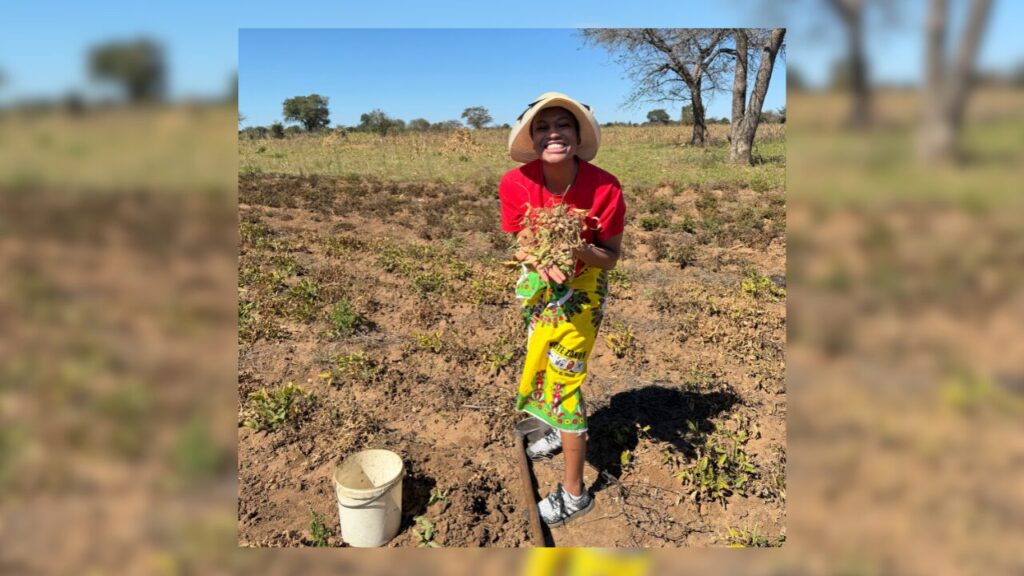
Land is wealth, Tsholotsho farmlands
The gift of the night sky
Then there was the night sky! This is the quiet tragedy of living in a city where the light pollution robs you of the night sky detail. Out there, with no major sources of electricity, the sky was crystal clear. Clear enough to see colour in the stars and the band of the Milky Way that our own planet sits inside.
Every single night I stepped outside for five or ten minutes to stargaze. You could pick out Starlink satellites moving in chains of two or three, and the odd plane on its own. I have always wanted to stargaze in the desert. Turns out I just needed to leave the city. Whenever those photos come up on my phone, I always stop and stare. The beauty of God’s creation and I got to witness it for a week.
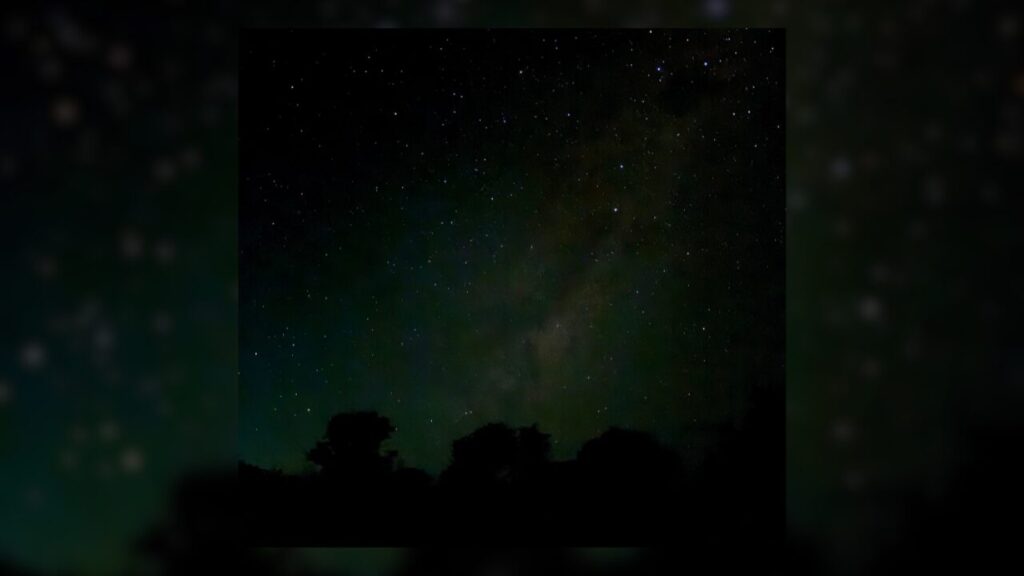
No light pollution, just the Milky Way
Khanyi’s birthday
The main reason for the trip was to celebrate Khanyi’s birthday. She is a birthday person to her core, she loves birthday celebrations. We drove back to town to pick up Malume’s wife, naVicky, who helped us find the cake. Back at the farm, the surprise landed perfectly with Khanyi not suspecting a thing. We sang, she was the centre of attention exactly as she loves to be, and you could see she felt fulfilled.
That is the part I appreciated. When we began mapping out the year, one of Khanyi’s goals was to see her grandparents. We made the plan and we pulled it off. Watching it come to life was a major achievement for her.
There was also a goat, slaughtered as a gift to the two of us. The goat marked our arrival and our union, a reminder of our wedding celebration in August.
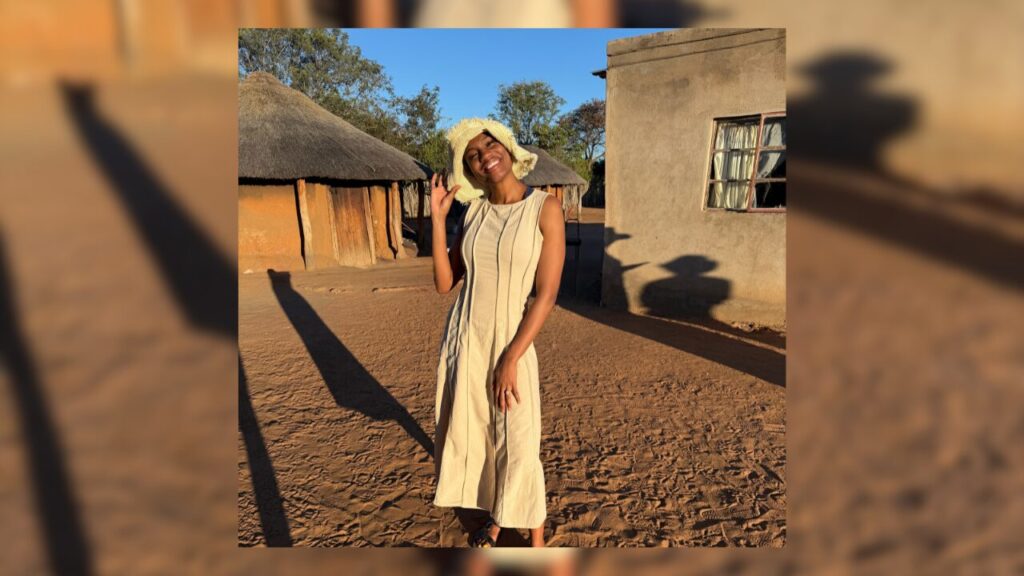
Celebrating Khanyi
A hard goodbye
As these things go, time ran out faster than we wanted. We left together, which was a gift in itself. We drove to Bulawayo, dropped Malume, then dropped Gogo and Khulu. That last drop was abrupt. Khanyi barely got to say goodbye so we circled back to give her a proper goodbye with Gogo and Khulu.
It told me everything about how much she loves her family, and how much they love and respect her. Khanyi is the firstborn grandchild and the firstborn daughter. In African families that carries a lot of weight and responsibility.
The family kept showing up even at the end of the trip. We also saw Khanyi’s paternal family. We visited her grand-aunt and her husband. A longtime family friend diverted his field work to spend fifteen minutes with us at the airport. Small gesture, big heart. Khanyi was so happy.
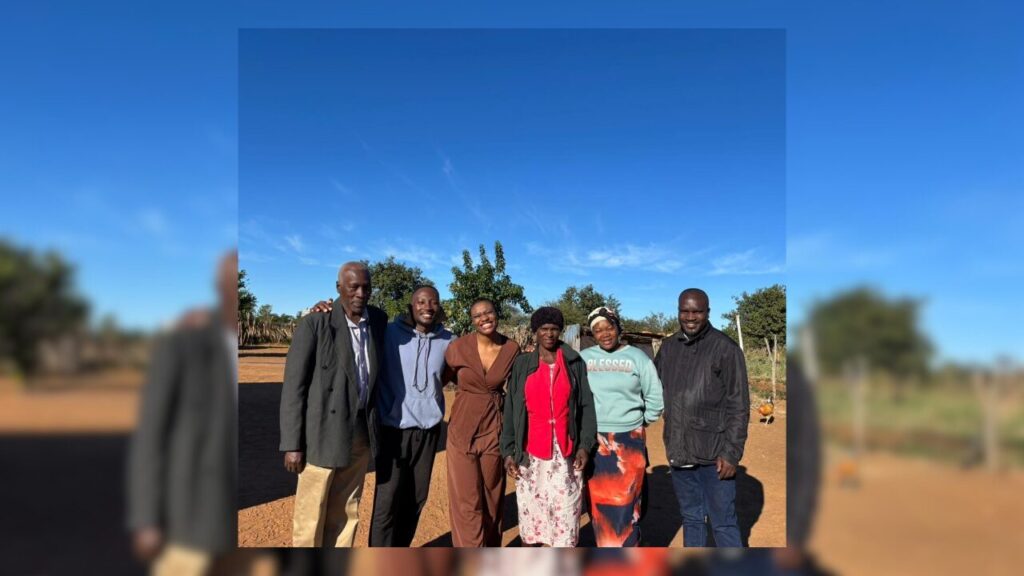
Always with family
What I brought home
We flew back safely, glad to be home, and with us the engine never really stops. We went almost straight into our wedding photoshoots, but that is a story for another day.
Three things stayed with me. I understand Khanyi more deeply now: why she loves her family, why her history matters to her, and where her drive and purpose come from. I gained a family, in-laws who showed me warmth, love, and grace from the first minute. And I discovered Zimbabwe firsthand, its history and its people, and finally took it off the list, not as a place I had read about, but as a place I had lived in, although briefly.
Why does any of it matter? Because roots tell you who you are, and family is where purpose is born. That is worth travelling for.
What about you? What have your family travels taught you and your loved ones?
Follow Global Ville on social media for more travel and lifestyle inspiration. Stay tuned to discover and live new destinations with Barbie and Ken.